
Spider Veins
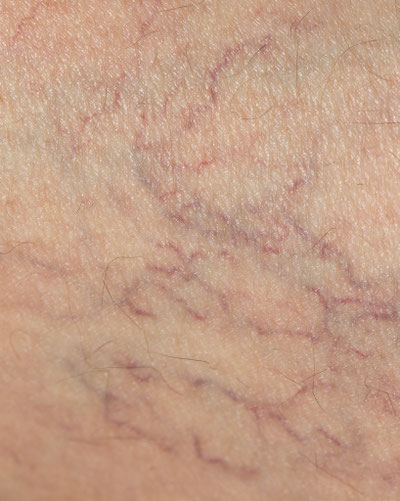
Spider veins are the thin red, blue, or purple lines that surface on the legs, thighs, ankles, and sometimes the face. At Truffles Vein Specialists, we treat spider veins using proven, minimally invasive care. While these tiny vessels are often a cosmetic concern, they can also signal underlying venous insufficiency, which is why an accurate diagnosis always comes before treatment. Our goal is simple: clear your legs safely and help you understand what is happening beneath the surface.
What Are Spider Veins?
Medically known as telangiectasias, these small clusters of damaged vessels sit close to the skin and form a web-like pattern. They appear when the tiny valves inside a vein weaken and blood begins to pool. Common triggers include family history, prolonged standing, pregnancy, hormonal changes, sun exposure, and age.
Larger blue reticular veins sometimes feed the surface network, so a quick cosmetic fix without checking deeper circulation can lead to recurrence. That is why we assess how your veins actually function, not just how they look.
Unlike bulging varicose veins, spider veins are flat and painless for most people, though some notice mild itching or a burning feeling after long days on their feet. They are extremely common, and many patients simply want them gone for cosmetic reasons.
Spider Veins Treatment Options at Truffles
Effective care depends on matching the method to your veins. Our Spider Veins treatment centers on sclerotherapy, the long-standing standard, in which a solution is injected to collapse the vessel so it fades over a few weeks. We offer visible, foam, and ultrasound-guided sclerotherapy to suit the size and location of your veins. When a larger underlying vein is feeding the spider veins, we treat that source first so the results last.
Most sessions take under an hour, require no general anesthesia, and let you return to daily activities the same day. During your visit we explain which approach fits your veins and roughly how many sessions to expect.
Good candidates are generally healthy adults bothered by the look of their veins or by mild leg discomfort. If a deeper vein problem is uncovered, we treat that source first, because clearing the surface without addressing what feeds it rarely lasts.
Why Choose Our Spider Veins Clinic
Choosing where you get treated matters as much as the treatment itself. As a dedicated clinic, we focus solely on vein health rather than offering it as a side service. Care is led by experienced physicians Dr. Paul Feldman and Dr. Christopher Perez, supported by a full team of nurse practitioners and vascular technologists.
A qualified spider veins doctor will review your circulation, explain your options in plain language, and recommend only what you genuinely need. When you want a second opinion or have a specific concern, our spider veins specialist team takes the time to answer your questions before anything is scheduled.
What to Expect During Spider Veins Removal
Treatment begins with a consultation and, when needed, a venous ultrasound to rule out reflux beneath the surface. From there, spider veins removal is straightforward: most patients need one to three short sessions spaced a few weeks apart, depending on how many vessels are involved.
You may wear compression stockings afterward to support healing, and treated veins gradually fade as your body clears them. You will also get simple aftercare guidance, such as walking regularly and avoiding long stretches of standing, which supports circulation while the veins settle.
Results tend to be long-lasting, though new veins can develop over time, so occasional touch-ups keep your legs looking their best.
Schedule Your Free Vein Screening
Not sure whether your spider veins are purely cosmetic or a sign of something deeper? Truffles Vein Specialists offers a free vein screening at our Metro Atlanta locations, including McDonough, Fayetteville, Newnan, and Carrollton. Book your visit today and get a clear, personalized plan from a team that treats veins every day.
FAQ
Are spider veins dangerous?
Spider veins are usually harmless and mainly a cosmetic issue. In some cases, however, they point to underlying venous insufficiency, especially when they come with aching, swelling, or heaviness in the legs. A quick screening tells you whether the veins are purely surface-level or connected to a deeper circulation problem that deserves attention.
What causes spider veins?
Spider veins form when small valves inside the veins weaken and blood collects close to the skin. Common contributors include family history, pregnancy, hormonal shifts, prolonged sitting or standing, sun exposure, and aging. Because the tendency is often genetic, they can appear even in people who are otherwise healthy and active.
How are spider veins removed?
The most common and most effective method is sclerotherapy, in which a solution is injected directly into the vein to seal it closed so it fades over time. When larger underlying veins are contributing to the problem, those are treated first to improve and protect the results. Sclerotherapy is minimally invasive, performed in the office, and requires little to no recovery time.
Is sclerotherapy for spider veins painful?
Most patients feel only a mild pinch or slight stinging as the solution is injected, and no anesthesia is needed. Sessions are short, and any minor tenderness or bruising usually fades within a few days. The large majority of people return to their normal routine right after leaving our office.
How much does spider vein care cost?
Cost depends on how many veins are treated and how many sessions you need, so pricing is confirmed after your consultation. Medically necessary vein care may be covered by insurance, while purely cosmetic work is typically self-pay. We review the full picture with you upfront so there are no surprises before care begins.
Do spider veins come back after treatment?
Treated spider veins do not return once they have been sealed and absorbed by the body. The tendency to develop new spider veins remains, though, particularly if the underlying causes persist. Many patients book occasional maintenance visits to address new vessels and keep their legs clear over the long term.
How soon will I see results?
Results appear gradually as the treated veins fade over roughly two to six weeks. Larger or more stubborn veins may need a follow-up session for full clearance. Since healing is a natural process, final results are usually visible within a couple of months of your last treatment.